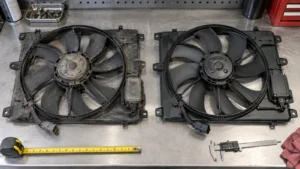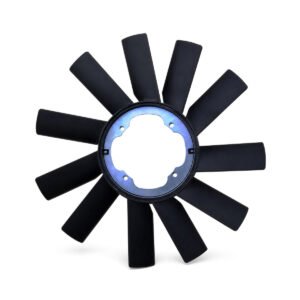
A repair shop calls for a “radiator fan.” Before quoting, ask one question: Which parts of the original fan can the workshop reuse? If the motor has been diagnosed as faulty, the blade and shroud are sound, and the vehicle manufacturer allows separate motor replacement, a motor-only order may be the right sale. If the workshop is replacing a cracked shroud and a damaged blade after a collision, even a perfectly matched motor leaves the repair unfinished.
For a distributor choosing between a radiator fan motor or complete assembly, the useful measure is not how often customers say “fan.” It is how often each supply form would have completed the job. Here is how to turn those calls into a stocking decision.
What are you actually putting on the shelf?
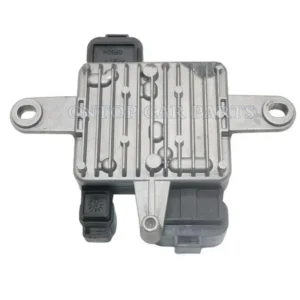
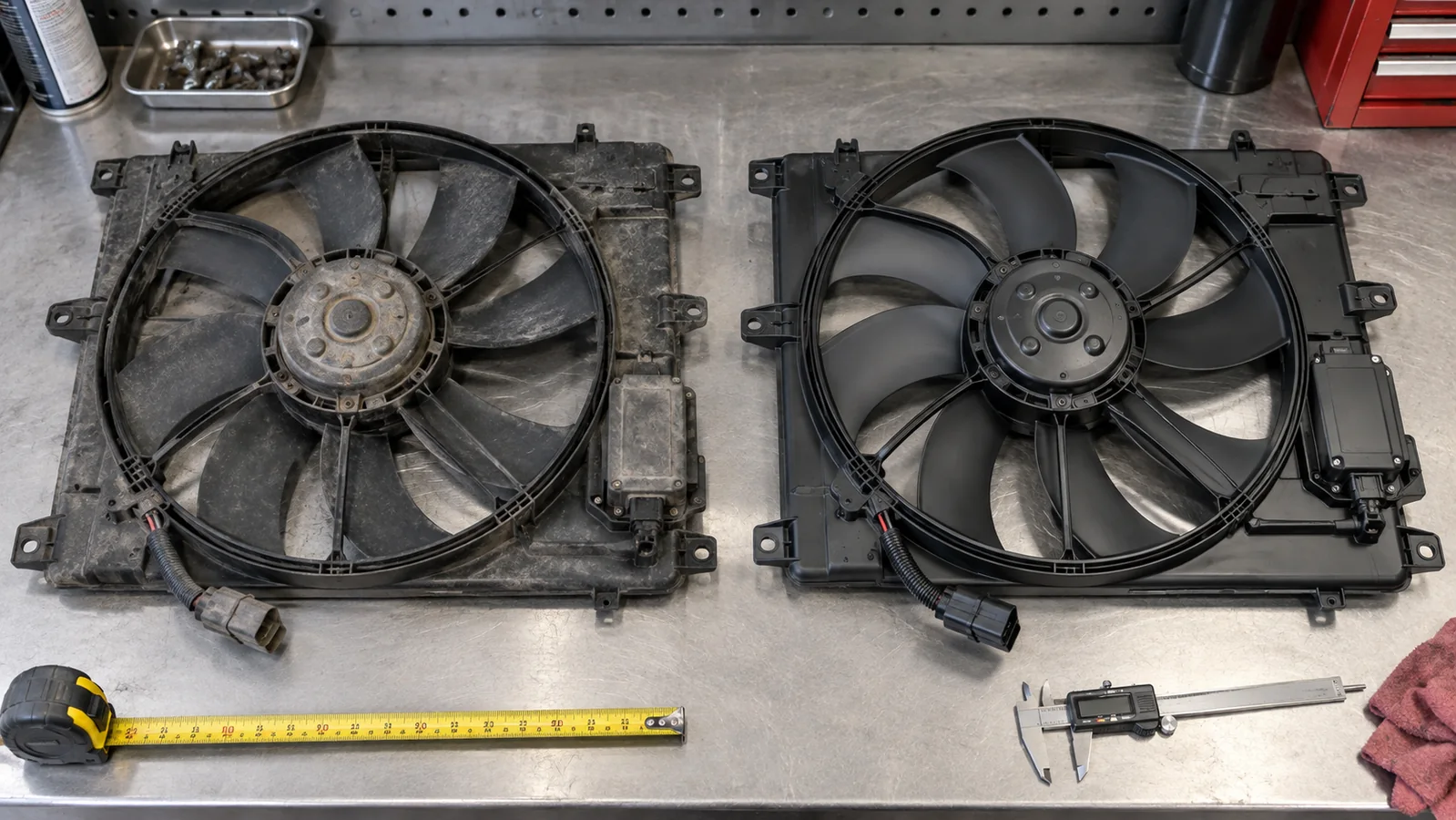
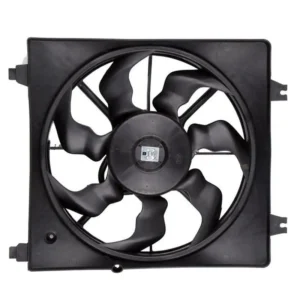
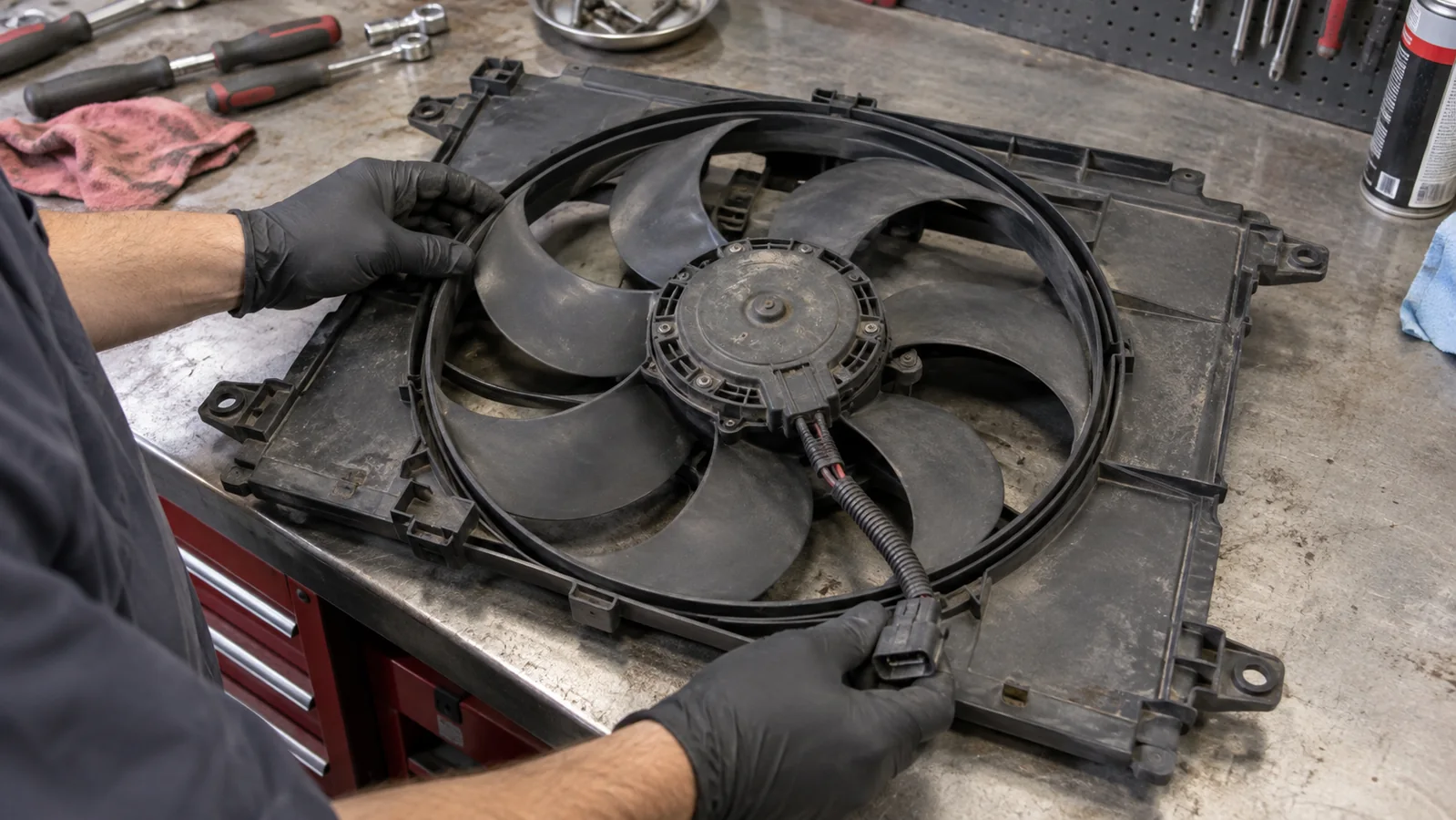
A motor-only SKU covers the drive motor and whatever lead or connector is explicitly listed. It does not provide a new blade or shroud unless the quotation says so. A fan assembly typically groups the motor, blade and supporting frame. “Complete” does not guarantee that a speed controller, resistor, second fan or mounting hardware is included. Record the supplied components on the stock card so the counter team can describe the part without opening a carton.
For example, Yongshang Auto lists OE 25380-2B100 for the Hyundai Santa Fe as a radiator fan assembly, item 6102-016. A shop asking for just the motor from that unit has made a different enquiry. The assembly number is a useful starting reference, not a verified part number for a separately supplied motor.
Match the stock line to the work your customers do
| What the customer reports | Stocking signal | What the counter should verify |
|---|---|---|
| Independent workshops repeatedly request a separately serviceable motor for the same application. | Consider a motor-only stock line. | Separate motor reference, shaft and blade attachment, mounts, connector and control compatibility. |
| Body shops request fans after front-end impacts; the frame or blade is damaged. | Consider stocking the matched assembly for repeat applications. | Shroud and mounting layout, fan configuration and whether the requested controller comes with it. |
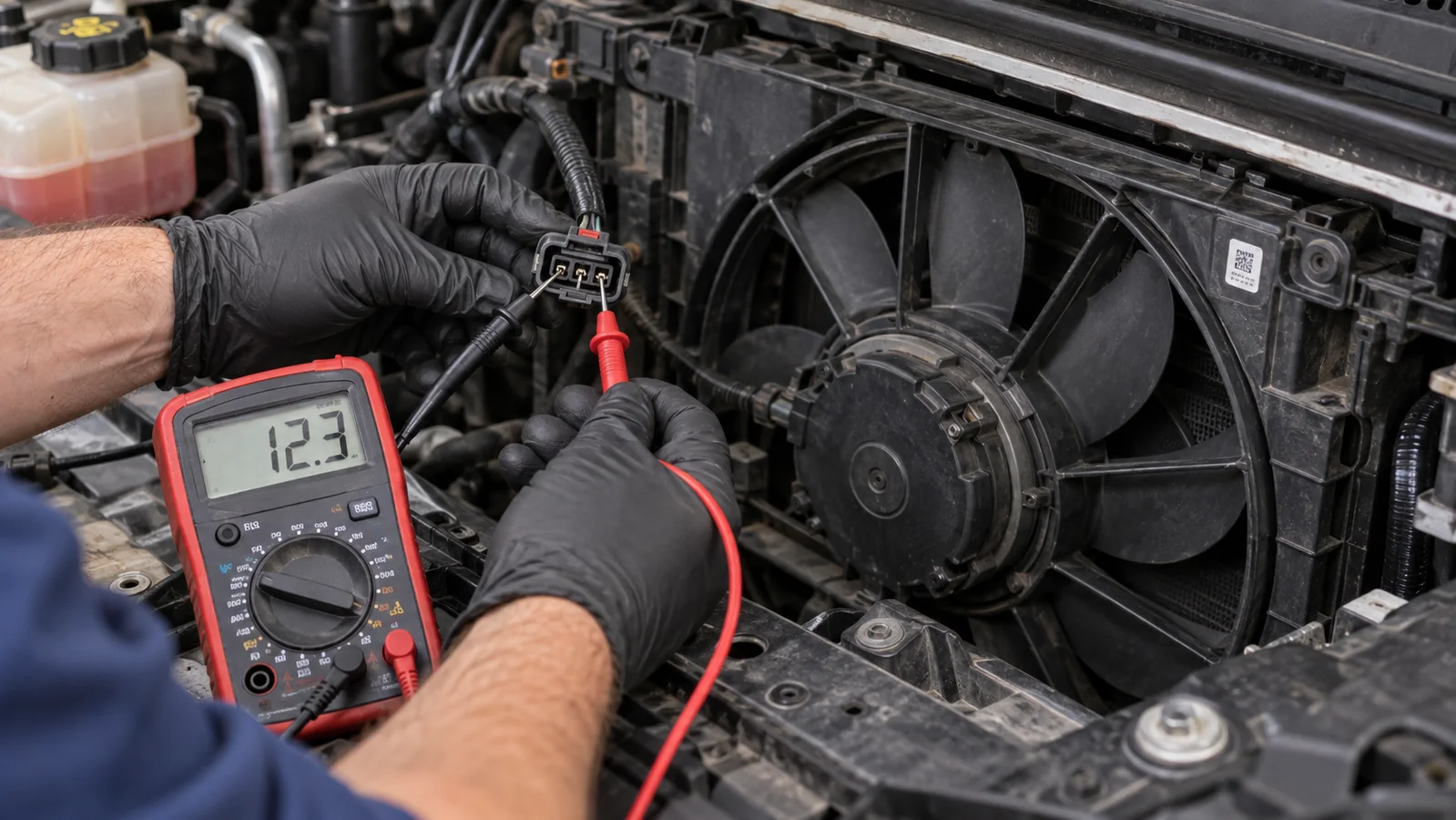
| “The fan stopped” is the only information supplied. | Do not count this as confirmed motor demand. | Ask whether a technician has identified the failed component. A control or wiring fault is not an order for a motor. |
| Both forms are requested, but only one sells regularly. | Stock the repeat seller; quote the other to order. | Actual replenishment time and whether the customer can wait. |
Compare margin per shelf space, not just purchase price
A motor may tie up less shelf space, but that helps only if workshops can use it. An assembly can deliver more gross profit per sale yet occupy a carton slot for months. For each confirmed reference, multiply expected units sold by gross profit per unit, then divide by the shelf space reserved for that line. Use landed cost rather than supplier price when calculating gross profit. Keep freight damage, returns and lost sales visible alongside the result.
Suppose two repair shops request the same motor five times in a month, while one collision shop asks for the assembly once and needs it the same day. Those are different reasons to hold stock. Before committing to both lines, check how many motor enquiries became paid orders and whether the assembly sale was lost specifically because of delivery time. Neither a single urgent call nor a stack of unqualified enquiries is a reliable sales forecast.
Keep one demand log, but two stock records
Give counter staff four fields to complete: requested application, confirmed supply form, outcome and reason for a lost sale or return. If a customer asked for a motor but bought an assembly because the shroud was broken, record one assembly sale, not one sale in each category. If the customer declined because the matching motor was unavailable, preserve that as unmet motor demand. Review the records after a replenishment cycle before increasing the order.
Request comparable quotations from Yongshang Auto
Send separate enquiry lines for a cooling fan motor and a radiator fan assembly. For the motor, include the motor label and close-ups of the shaft, mounts and connector. For the assembly, include the assembly OE reference and photographs of the entire frame. Ask Yongshang Auto to confirm the quoted contents, carton dimensions, quantity per carton and lead time for each line. Do not assume a motor-only equivalent exists for every assembly.
Check a fan assembly’s fitment before ordering or send your two-line stock enquiry to Yongshang Auto.