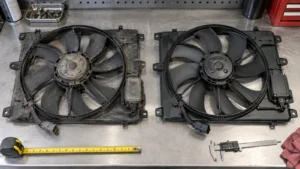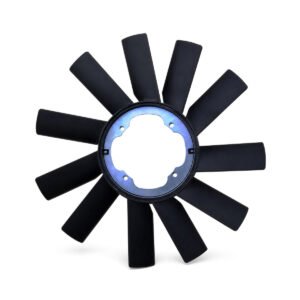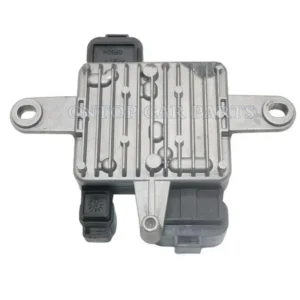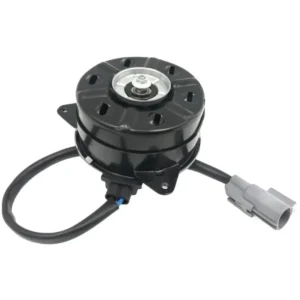
If a two-speed radiator fan works on high but not on low, check whether low speed was actually requested before ordering a resistor, relay or fan motor. A loud burst of airflow proves that at least one fan can run under that condition. It does not prove that the low-speed circuit is intact, that both motors work on a twin-fan setup, or even that the vehicle uses a two-speed circuit.
Safety: If the temperature warning comes on, the gauge rises abnormally or you see steam, stop safely and switch off. Do not idle the engine until it overheats to force a fan test. Electric fans can start unexpectedly. Keep hands and tools clear, leave the hot coolant cap closed and have a qualified technician perform live electrical checks.
First check: compare requested speed with actual fan operation
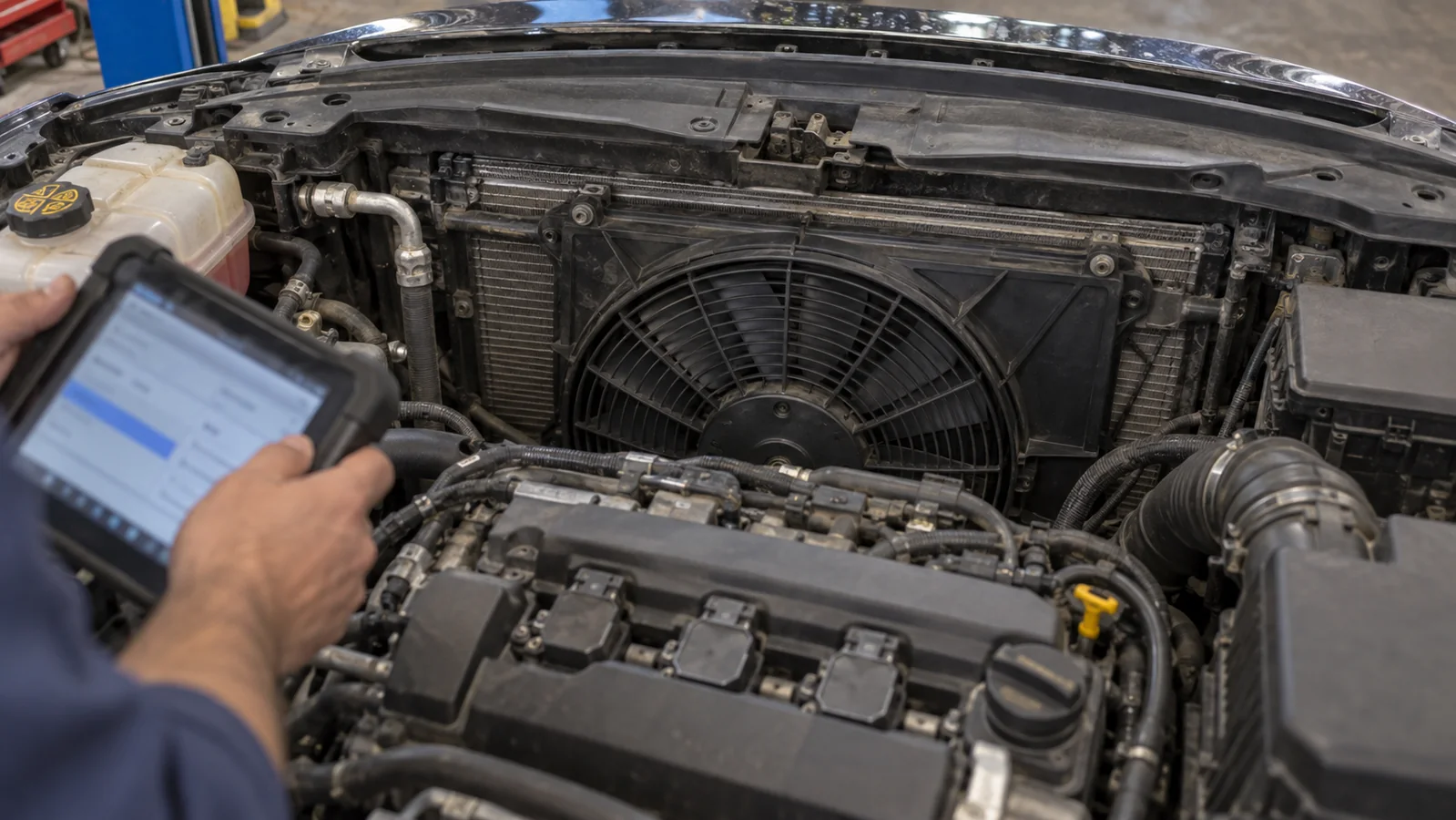
Use the wiring diagram and service information for the exact engine and cooling package. Where supported, a technician can use a bidirectional scan tool to request low and high speed separately, under the conditions specified for the test. Record what the controller requested and what each fan actually did. A command displayed on the tool is not feedback from the motor.
| What you observe | What to check next |
|---|---|
| No low-speed request; fan runs when high is requested. | Check whether the operating conditions call for low speed. Compare coolant-temperature and A/C pressure data with the vehicle’s strategy. Do not condemn the low-speed hardware yet. |
| Low is requested but neither fan responds; high works. | Identify what the low-speed path uses that the high-speed path bypasses or configures differently. |
| Low works in the output test but not during the reported event. | Record the command and response when the symptom occurs. A working output test points away from a permanent open circuit; it does not rule out an intermittent fault. |
Turning on the A/C is not a universal low-speed test. The cabin blower is a different motor, and a lit A/C button does not establish the condenser pressure, compressor state or fan request. If the vehicle has no low-speed scan command, follow its specified test for the thermal switch, relay or fan controller.
Follow the low-speed path shown on the diagram
Resistor-controlled fan. Some systems route motor current through a resistor on low and bypass it on high. An open resistor, damaged terminal or missing feed to that branch can therefore leave high speed working. Verify that the branch is being switched and follow the specified resistor and connector tests. A relay click alone does not prove its contacts carry current.
There is a useful model-specific example in Kia service bulletin CLI 043. For certain manual-temperature-control 2012–2015 Rio vehicles, Kia checks fan operation with its diagnostic tool and tests the resistor when low speed fails. The procedure distinguishes a failed resistor from a motor or supply problem. It is not a blanket recommendation to replace a resistor on every vehicle with this symptom.
Two fans switched in series and parallel. On designs that put the two motors in series for low speed, both share one current path. An open motor or series connection can stop both at low speed, while one motor still runs when the high-speed arrangement feeds the branches separately. This is why “I can hear high speed” is less useful than “both fans ran on high, neither ran on low.” Inspect the series path and changeover relay contacts identified on the schematic; do not assume there is a separate low-speed resistor.
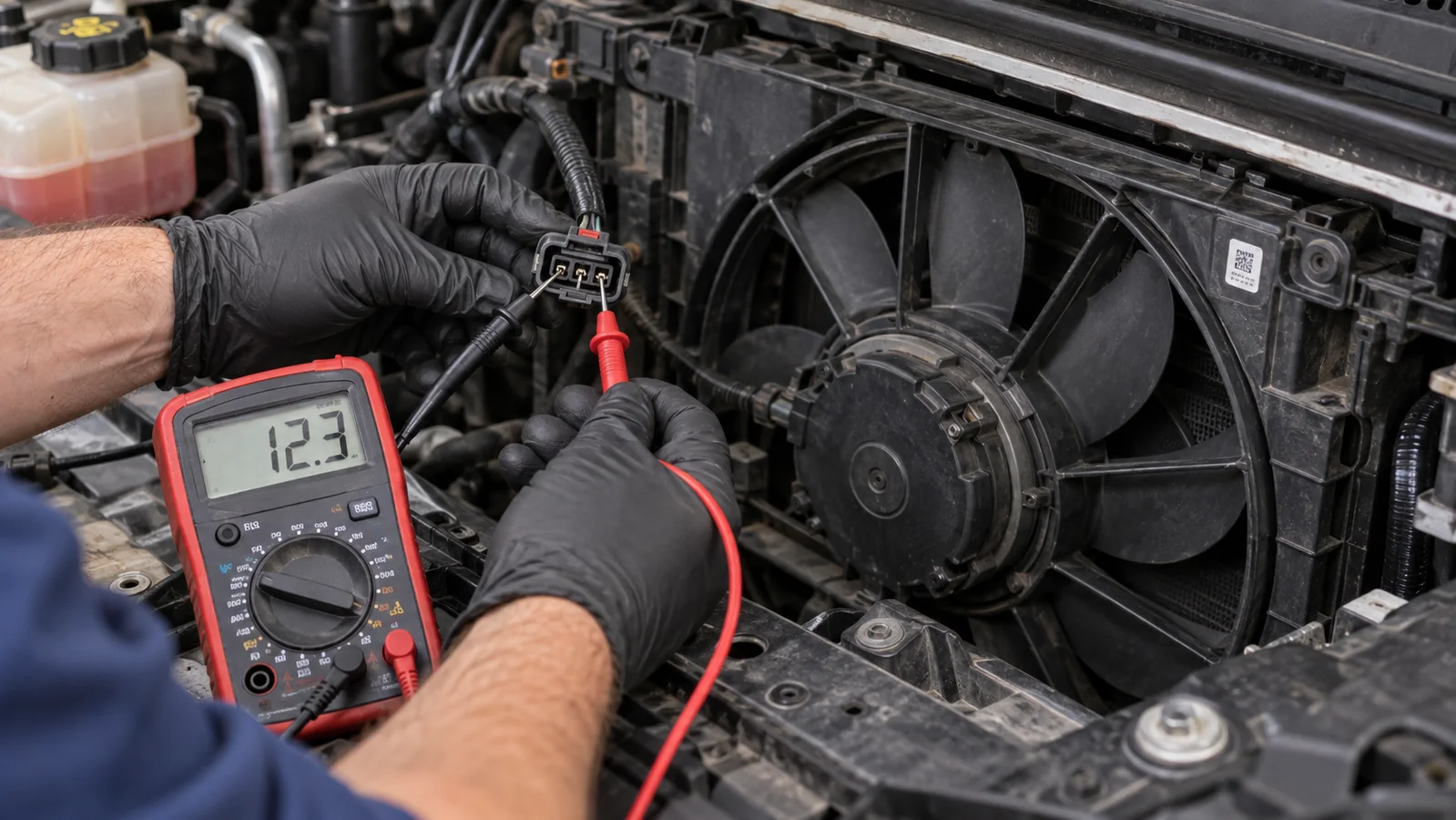
Dedicated motor inputs or an electronic controller. A motor with separate speed inputs needs the correct low-speed feed and return. A variable-speed electronic fan, by contrast, may only sound like a two-speed unit. Its main supply can be present while the speed request is missing or incorrect. Verify supply, ground and the specified control signal before blaming the module. Do not apply battery voltage to a control pin or bridge relay terminals to simulate a command.
What a high-speed pass does not tell you
A motor that starts on high can still struggle to start at the lower drive level. When the correct low-speed drive reaches the unit, have the workshop check for interference or drag with the assembly safely isolated, and compare current or speed feedback with the service specification where available. Do not use a hand push to start the blades. If the failure follows temperature rather than a particular stage, see how to capture a fan fault while it is hot.
Match the replacement to the failed part
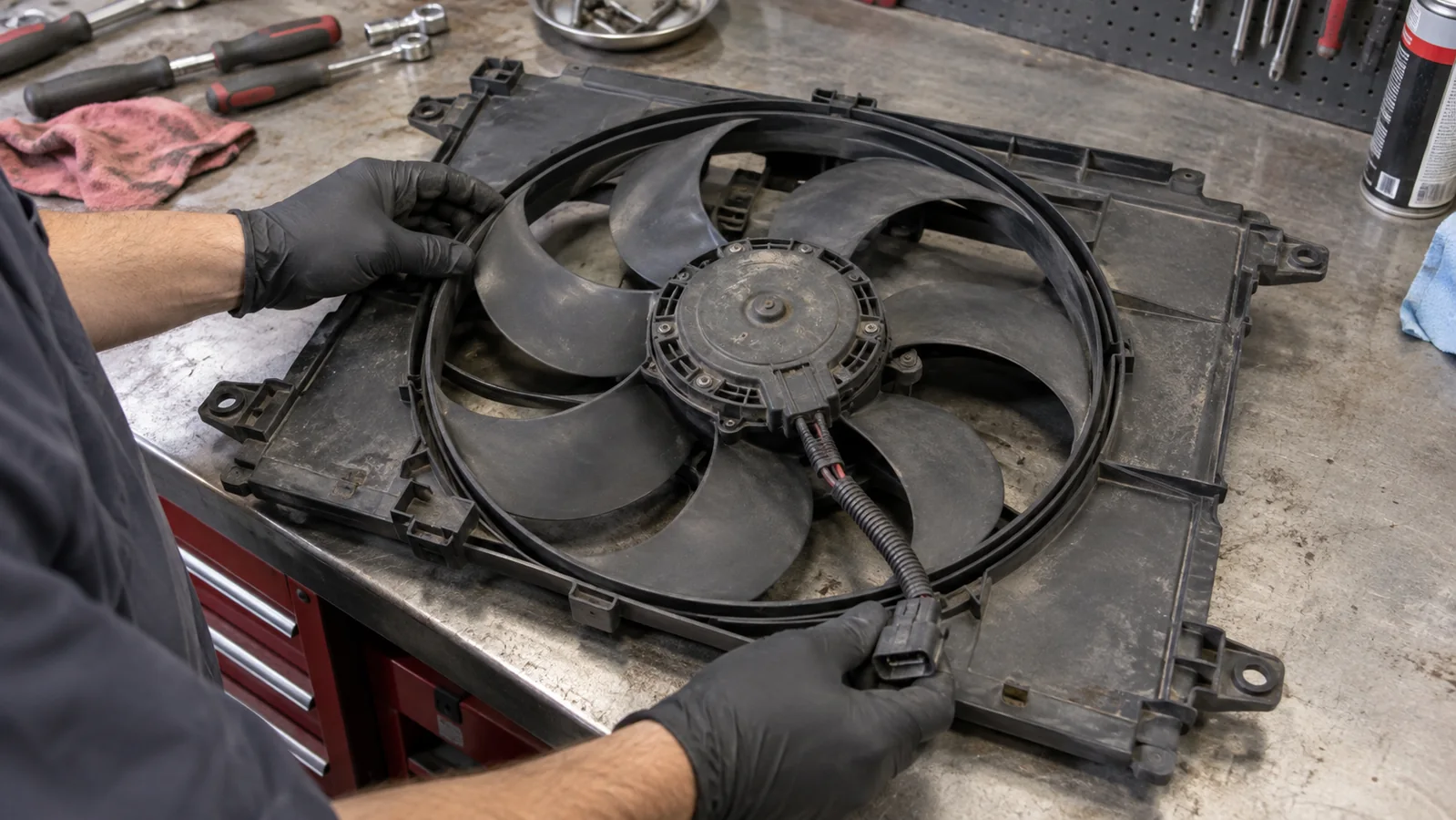
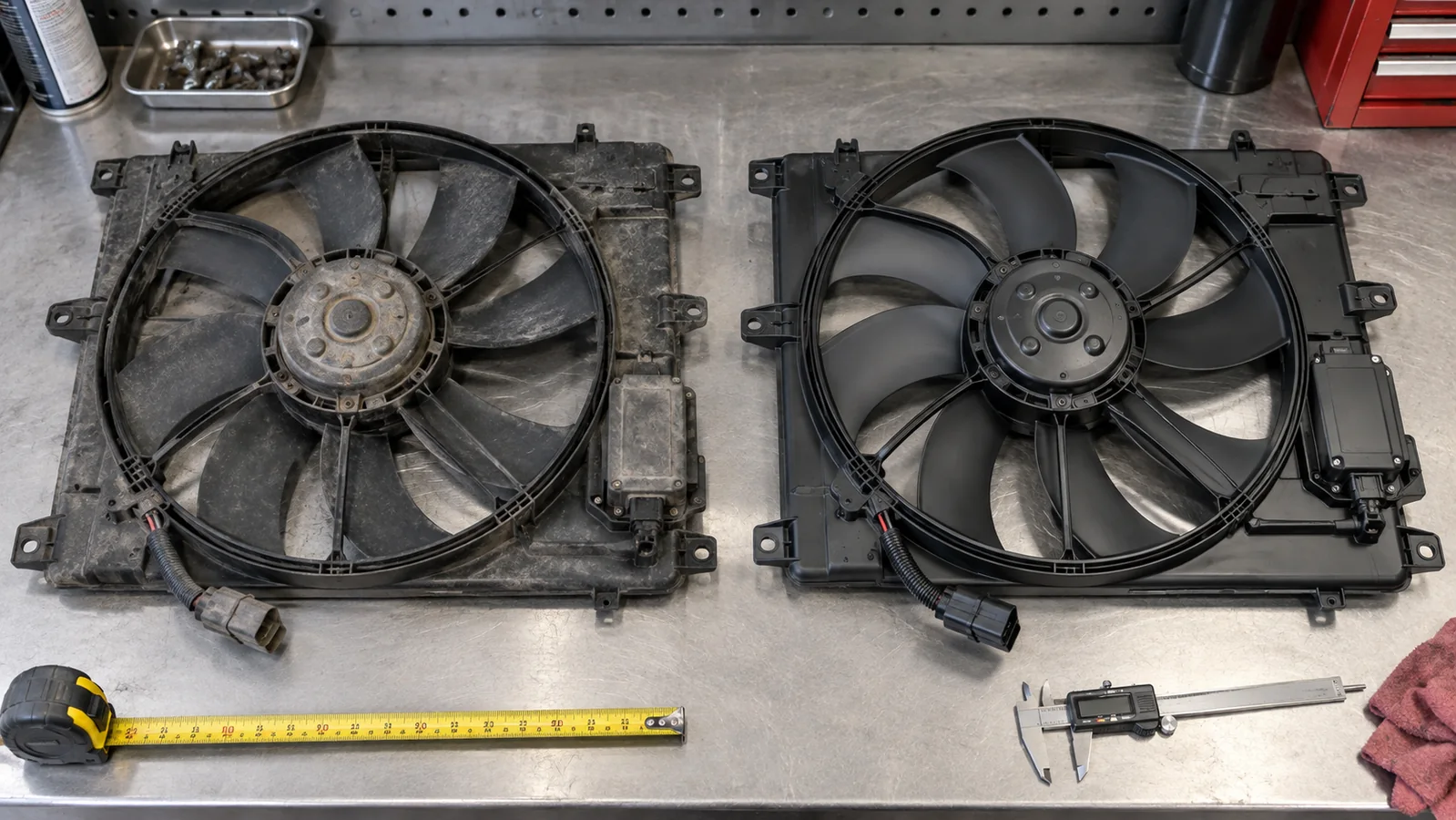
If testing isolates an external resistor or relay, identify its service part rather than ordering a complete fan. If a controller or motor is faulty, check whether it is supplied separately or integrated into the assembly. For a Yongshang Auto parts enquiry, send the vehicle year and engine, original reference, connector photos and a one-line test result: “low commanded: ___; high commanded: ___; affected fan: ___.” Ask whether the quoted assembly includes its controller.
Final check: Repeat the same low- and high-speed requests after repair. Confirm that each fan responds as specified on low, that high still works, and that normal automatic control resumes when the output test ends.