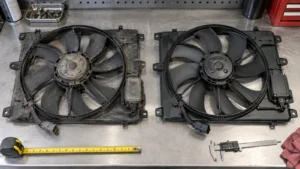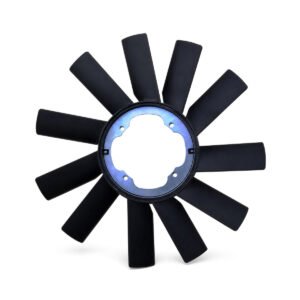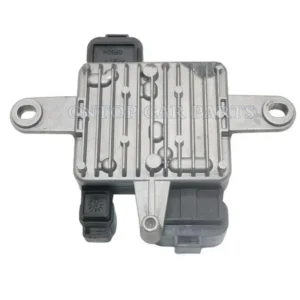
When a radiator fan stops when hot and works again after cooling down, the most useful reading is the one taken as it stops. Did the vehicle stop requesting airflow, or did the fan stop responding to a request that was still present? A fan that runs normally on a cold workshop floor cannot answer that question.
If the coolant warning appears, the gauge rises abnormally, or there is steam or a burning smell, stop safely and switch off. Do not keep the engine running to reproduce the fault. Never open a hot coolant cap. Electric fans may start unexpectedly, even after shutdown; keep hands, tools and test leads clear. The live checks below are for a qualified technician using the vehicle’s wiring diagram and service procedure.
First separate normal cycling from a missed fan command
A hot engine does not necessarily need continuous fan operation. The controller can reduce or cancel its request as cooling demand changes. A dashboard gauge, a running A/C blower or the fact that the engine feels hot is not proof of an active fan command. Check the specified control strategy: a thermal switch and relay, a staged fan circuit and a variable-speed electronic fan do not provide the same test points or scan data. HELLA’s cooling-system diagnostic guide likewise distinguishes checking the fan switch-on point and control unit from checking the rest of the cooling system.
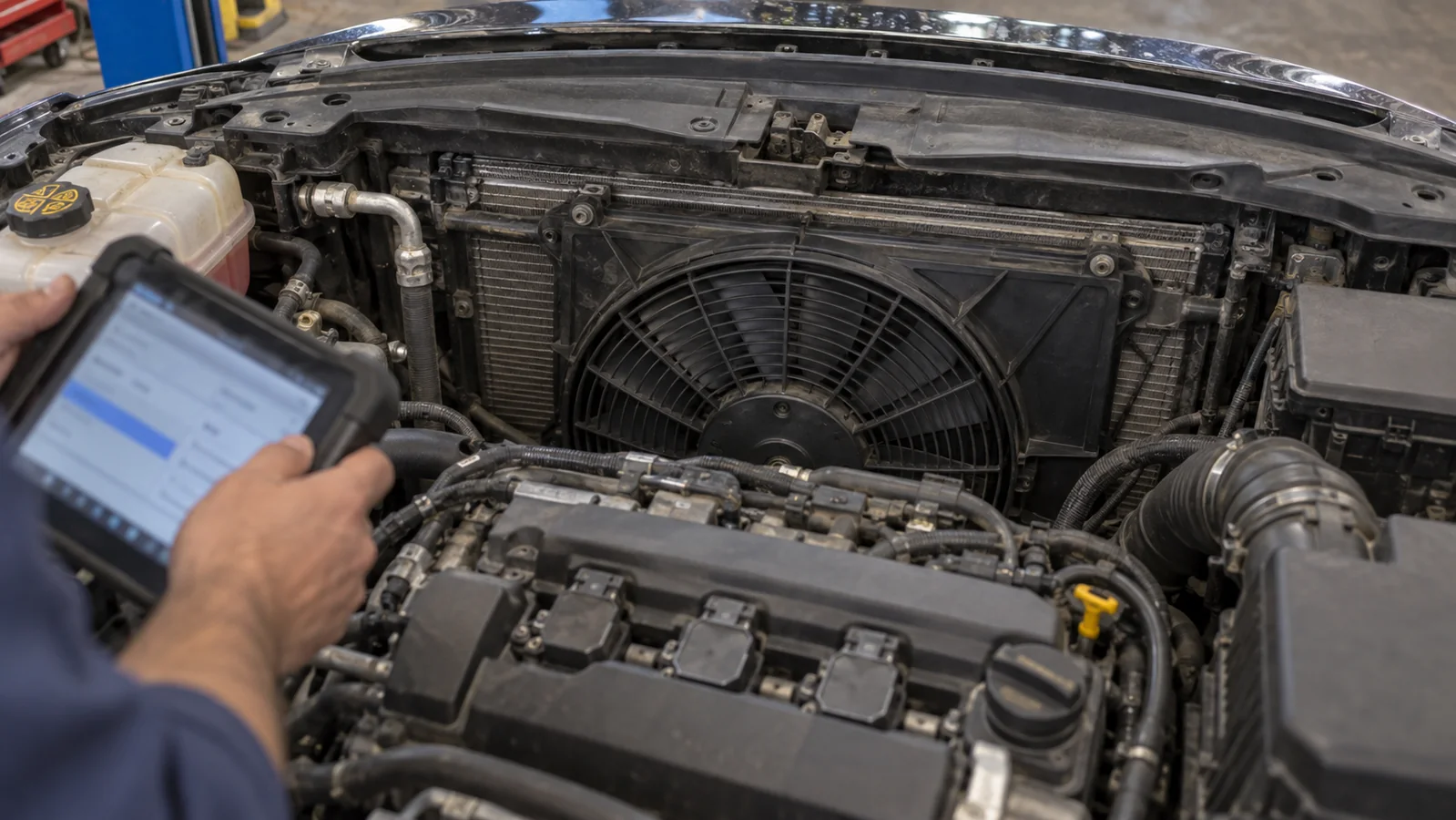
Capture three moments, not one cold reading
| When | What to record | What it tells you |
|---|---|---|
| Fan operating normally | Coolant temperature, requested stage or speed, actual response and system voltage. | Establishes a working reference for this vehicle. |
| Fan stops while hot | Log the same channels together; note changes in A/C demand, vehicle speed and any fault codes. Preserve freeze-frame data before clearing anything. | Shows whether the request disappeared first or the fan stopped despite continued demand. |
| Fan operates again | Record whether recovery followed cooling alone, an ignition cycle or a change in commanded stage. | A key cycle or different speed stage is an alternative explanation for the restart. |
For example, if a fan works on low and stops exactly when the high-speed stage is requested, the high-speed circuit deserves attention. That transition can look like a heat-sensitive motor failure because high speed is first requested when the engine is hotter. Compare like with like before blaming temperature.
Request stays on: follow power, ground and control to the fan
A scan-tool request describes what the controller wants; it does not prove that a relay closed or that the signal reached the fan. While the symptom is present and testing remains safe, check the specified supply and ground paths under load using approved access points. A high-resistance connection can show battery voltage with the fan unplugged and fail when current flows. Conversely, if the motor circuit has opened and no current is flowing, a small voltage drop does not prove that the path can carry the required load.
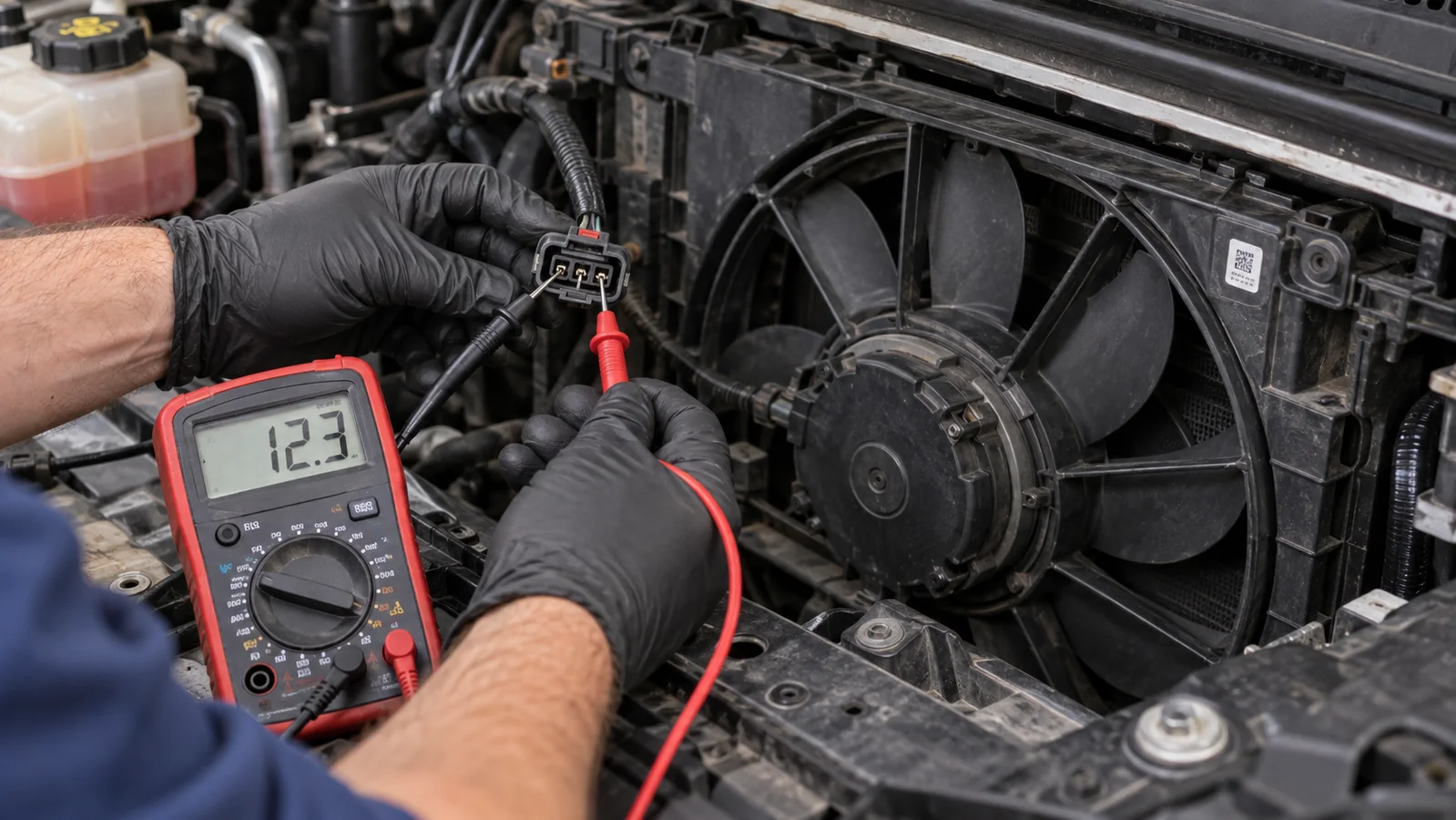
On a relay-controlled system, separate the relay command from its switched output. On an electronically controlled fan, use the manufacturer’s method to verify the signal at the module and its main supply and ground. A multimeter’s averaged reading is not a substitute for validating a pulse-width or network command. Do not apply battery voltage to a signal terminal or bridge the relay as a roadside test.
Use the hot-fault evidence to choose the next check
- Request disappears as the fan stops: Check whether the change agrees with coolant temperature, A/C demand and the specified strategy. If an input jumps implausibly as the fan stops, investigate that input and its wiring. Do not order a motor on this evidence alone.
- Request remains, but the supply or ground path fails under load: Trace that path through its connectors, relay or power distribution point. If the plug shows heat damage, see why replacing a melted fan plug alone may not fix it.
- Correct supply, ground and control reach the unit while it remains stationary: The fault is narrowed to the fan unit or its local mechanical load. Where supported, compare current and speed feedback at the same command, hot and cold. An integrated controller can fail independently of the motor; some designs do not allow separate testing.
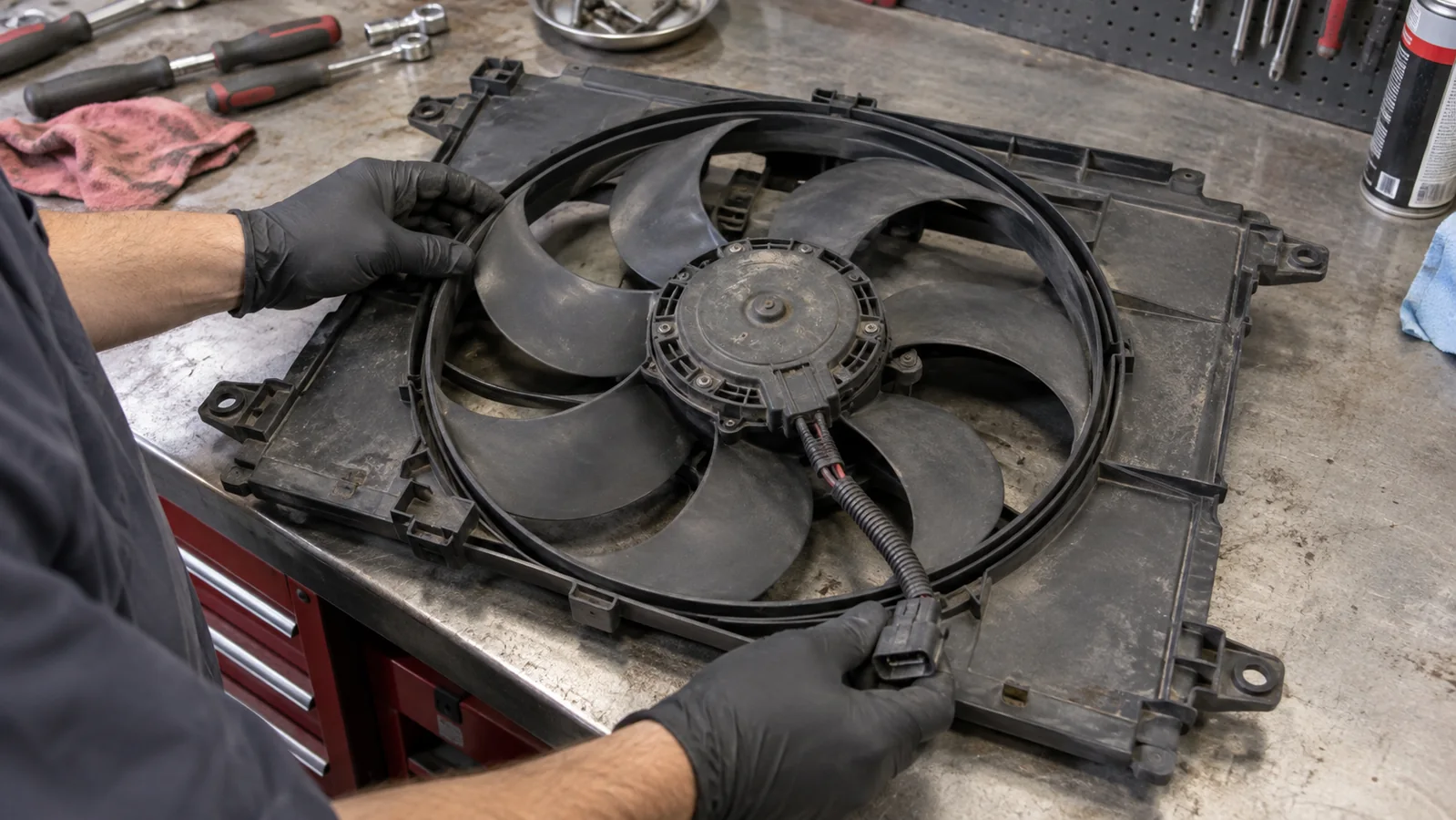
What if the fan works again before the technician sees it?
Record how long the vehicle had been running, whether it was stationary or moving, whether one or both fans stopped and whether anyone switched the ignition off. If the vehicle provides these data, a workshop can arrange safe logging of command, temperature and fan response. A cold pass should be reported as “fault not present during this test,” not “fan proven good.” There is no universal cut-in temperature, current limit or cool-down time that diagnoses every fan.
Order only the part the evidence supports
A failed external control unit calls for a different quotation from a motor that stops responding with a verified supply. If the fault is internal, use the vehicle parts information to determine whether the motor, fan control module or complete assembly is serviceable. For a Yongshang Auto fitment enquiry, include the original reference, vehicle configuration, connector photos and the workshop’s confirmed repair scope.
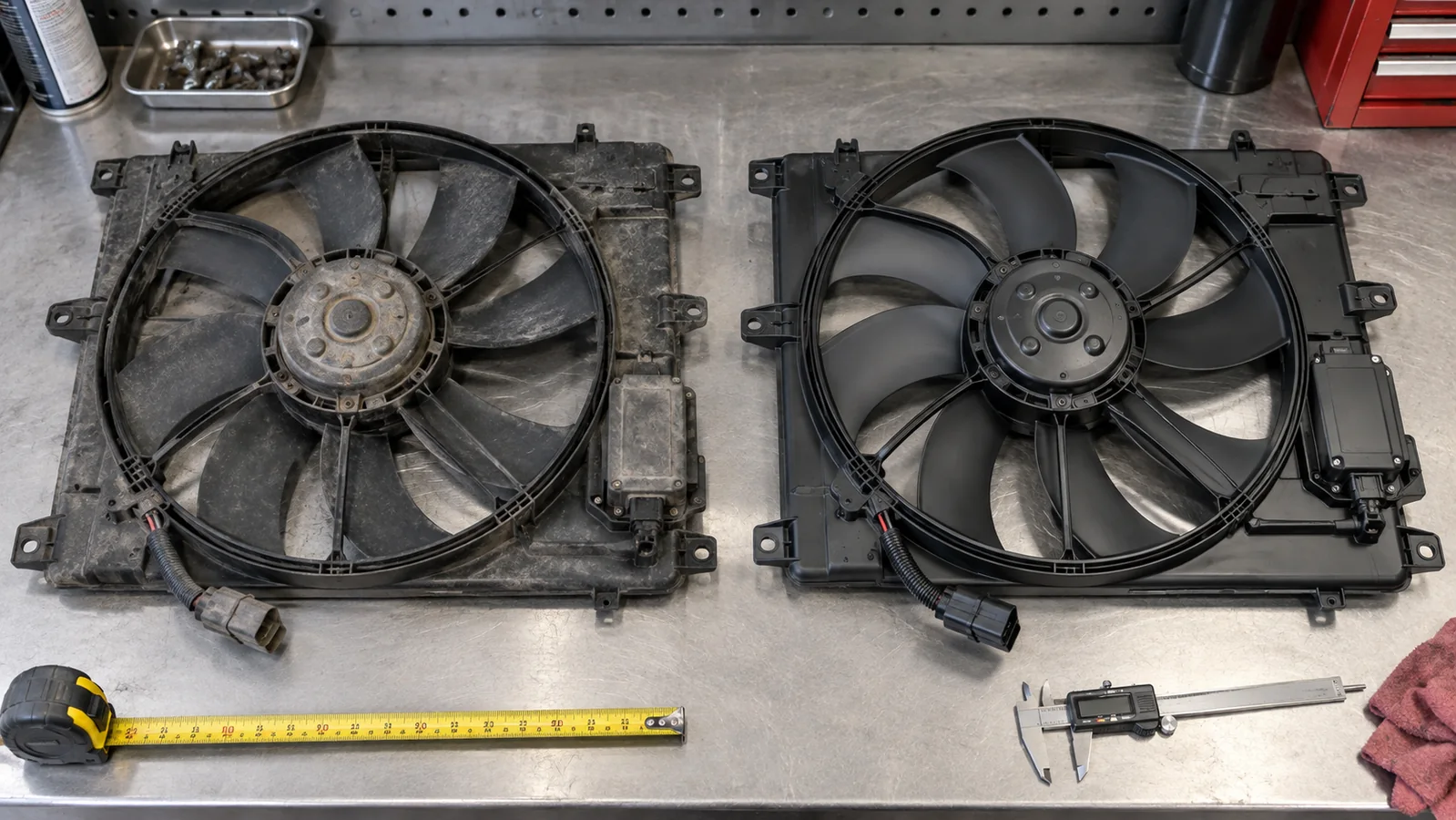
After repair, verify the same operating stage and conditions that originally exposed the fault, within safe temperature limits. A successful cold start shows that the fan can run. A sustained response to the previously missed hot command is the stronger repair check.