The Yongshang Auto radiator fan range includes two catalogue categories for buyers: vehicle-specific radiator fan assemblies and universal electric radiator fans. Which one should you ask for? If a repair shop gives you the number on a damaged fan shroud, start with a vehicle-specific assembly. If a customer gives you a drawing of a custom radiator installation, start with the universal fan category. The first enquiry is about matching an existing part; the second is about meeting a cooling requirement within a defined space.
Vehicle-specific assemblies: start with the part you are replacing
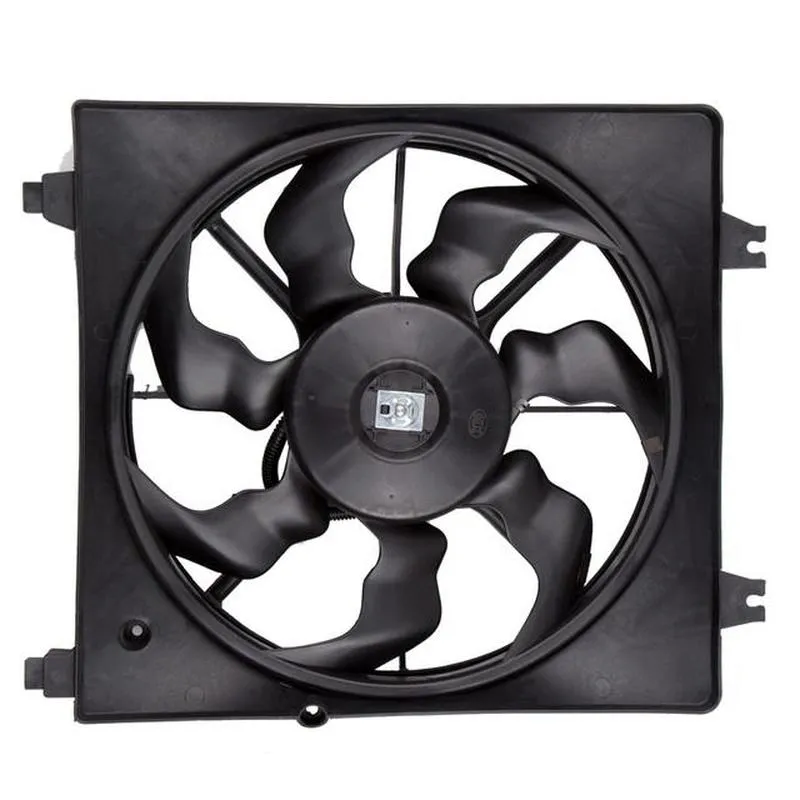
Consider a shop ordering a replacement for a Hyundai Santa Fe. Yongshang Auto lists radiator fan assembly 25380-2B100 for the 2007–2009 Hyundai Santa Fe under its own item number 6102-016. Those two numbers serve different jobs: the OE reference identifies the part being compared, while the Yongshang item number identifies the catalogue entry to quote.
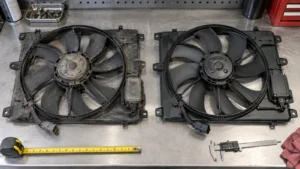
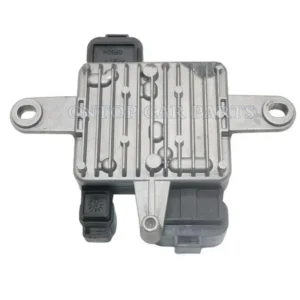
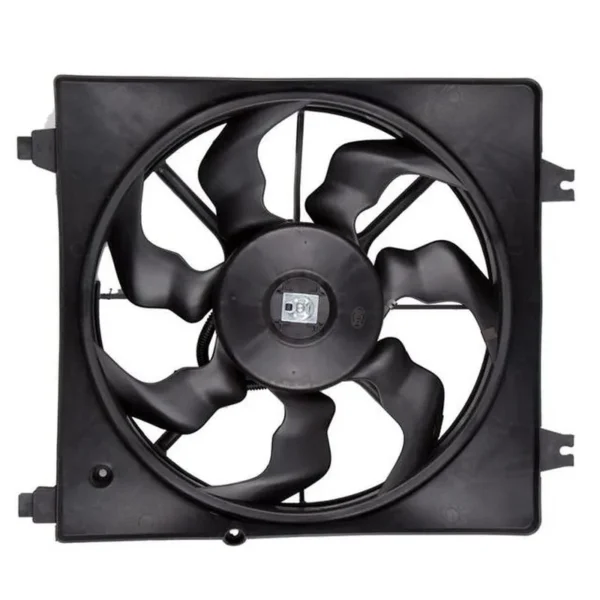
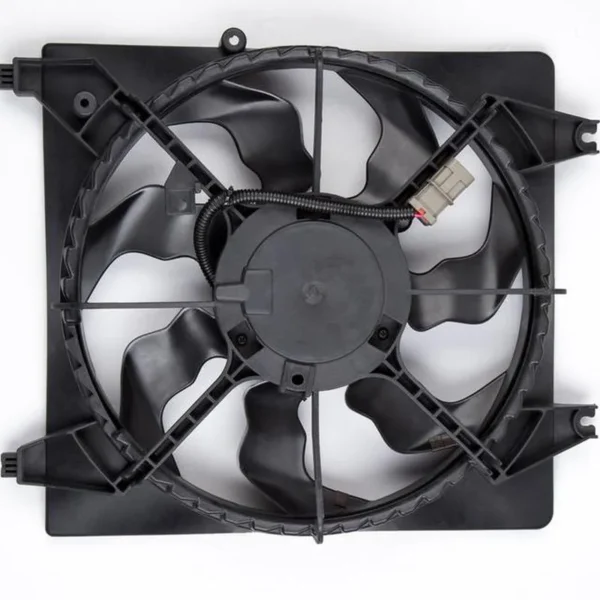
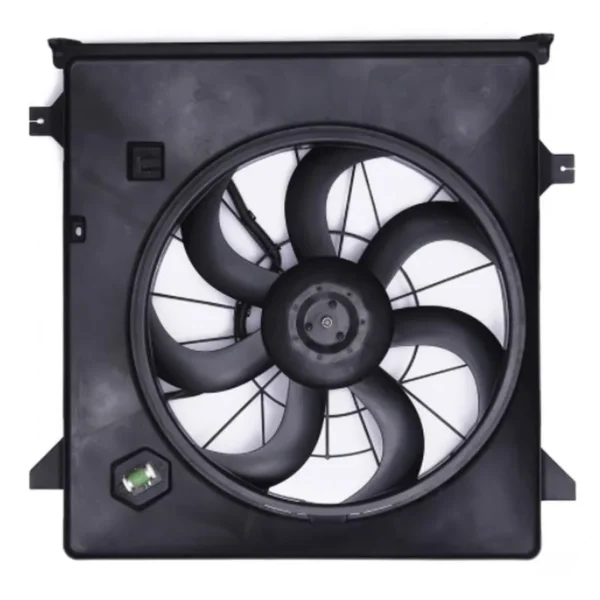
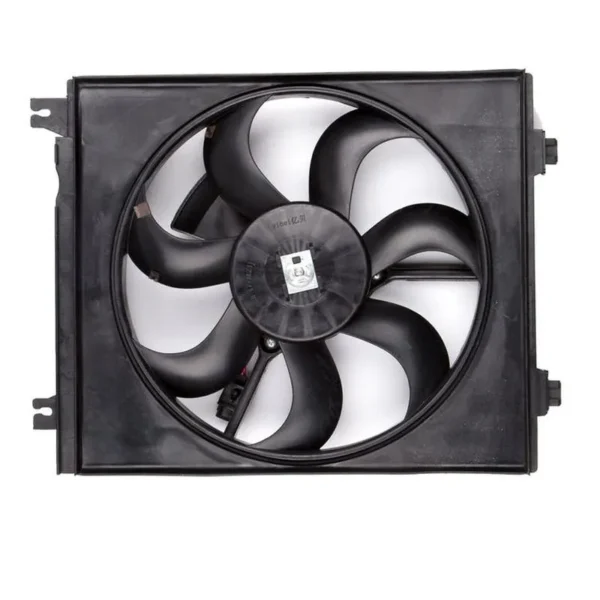
Before treating that entry as a match, compare the old shroud with the product photographs. Are the upper and lower mounting tabs in the same positions? Does the motor plug have the same keying? A front view may show the right blade layout while hiding a different connector on the back. Send both views if the label is missing. For other Korean vehicle applications, see the Hyundai and Kia radiator fan sourcing guide.
Examples from the vehicle-specific catalogue
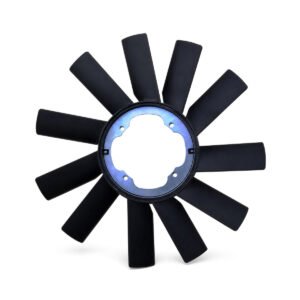
These product photographs illustrate the assemblies identified by their individual catalogue entries. Compare the complete frame, not just the outline of the blades.
Universal electric fans: start with the installation space
A universal fan is not a promise of a direct fit. Take a workshop fitting a different radiator into a project vehicle: the radiator face may be wide enough for the blade, but the motor can still project into space occupied by a pulley. A useful drawing shows the space available for the entire fan frame and the clearance at the motor, not just the blade diameter.
Specify whether the proposed fan needs to push air into the radiator or pull air through it. Ask for the approved orientation of the particular fan; do not assume a model can switch roles. Give the supplier the system voltage and the required airflow through the radiator and condenser, if known. A free-air airflow figure alone does not show how much air will pass through that stack. Request the performance data, mounting drawing and electrical requirements for the exact item under consideration.
Which category belongs on your enquiry?
| What your customer supplies | Where to start | What to confirm next |
|---|---|---|
| Vehicle details and an OE number | Vehicle-specific assembly | Shroud outline, mounting tabs, plug and supplied components |
| A removed assembly with an unreadable label | Vehicle-specific identification | Front and rear photographs, mounting dimensions and vehicle configuration |
| A radiator drawing for a custom installation | Universal electric fan enquiry | Frame dimensions, motor depth, airflow direction, performance and controls |
Can a distributor list a universal fan against an OE number?
Not on the basis of diameter alone. A universal fan can share the blade diameter of a vehicle-specific assembly without matching its shroud, plug or speed control. Keep the two catalogue records separate unless the complete application has been validated. That distinction also helps your sales team answer the question a repair shop actually asks: “Will it connect and mount like the one I removed?”
Request a radiator fan quotation from Yongshang Auto
For a replacement assembly, send the OE reference, vehicle details, photographs and quantity. For a universal fan, send a dimensioned sketch, electrical requirements, airflow direction and quantity. If you need both, put them on separate enquiry lines so each quotation can identify the exact part, what is included and current availability. Send your enquiry to sales@yongshangauto.com.