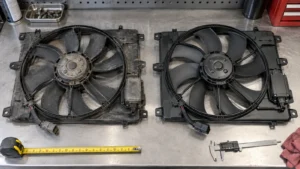
Choosing between single fan vs dual fan cooling systems is not simply a matter of counting motors. The best setup depends on radiator size, available installation space, airflow under resistance, engine heat output, electrical capacity and how the vehicle is used.
A properly matched single electric fan can cool a daily driver more effectively than a poorly designed dual-fan assembly. At the same time, dual fans can provide wider radiator coverage and more flexible staged operation for large radiators, performance vehicles, towing applications and vehicles that spend long periods idling.
This guide explains how each system works, compares the advantages and disadvantages, and shows what to check before choosing a replacement radiator fan.
What Does a Radiator Cooling Fan Do?
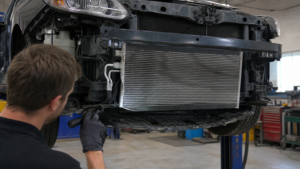
The radiator transfers heat from the engine coolant to the surrounding air. While the vehicle is moving, outside air passes through the radiator fins. At low vehicle speeds or while idling, natural airflow may not be sufficient, so the cooling fan forces air through the radiator and A/C condenser.
DENSO explains that electric cooling fans support heat transfer when a vehicle is stationary. This is why fan condition has such a noticeable effect during traffic, low-speed driving and A/C operation.
What Is a Single Fan Cooling System?
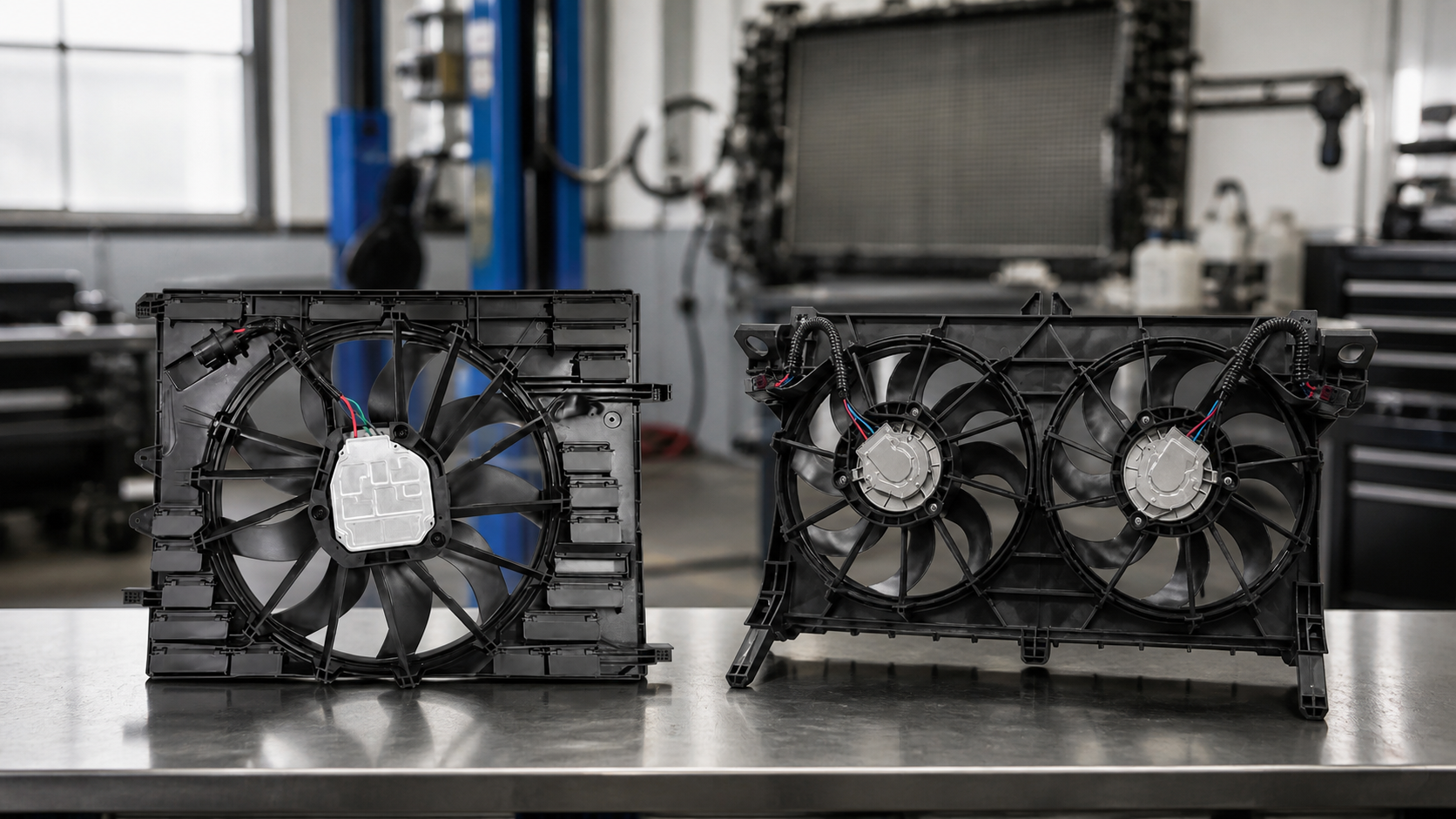
A single fan cooling system uses one fan motor and one blade assembly. It may be mounted inside a full shroud or installed as a more compact standalone unit. Most primary electric fans are placed behind the radiator as puller fans, although the correct layout always depends on the vehicle design.
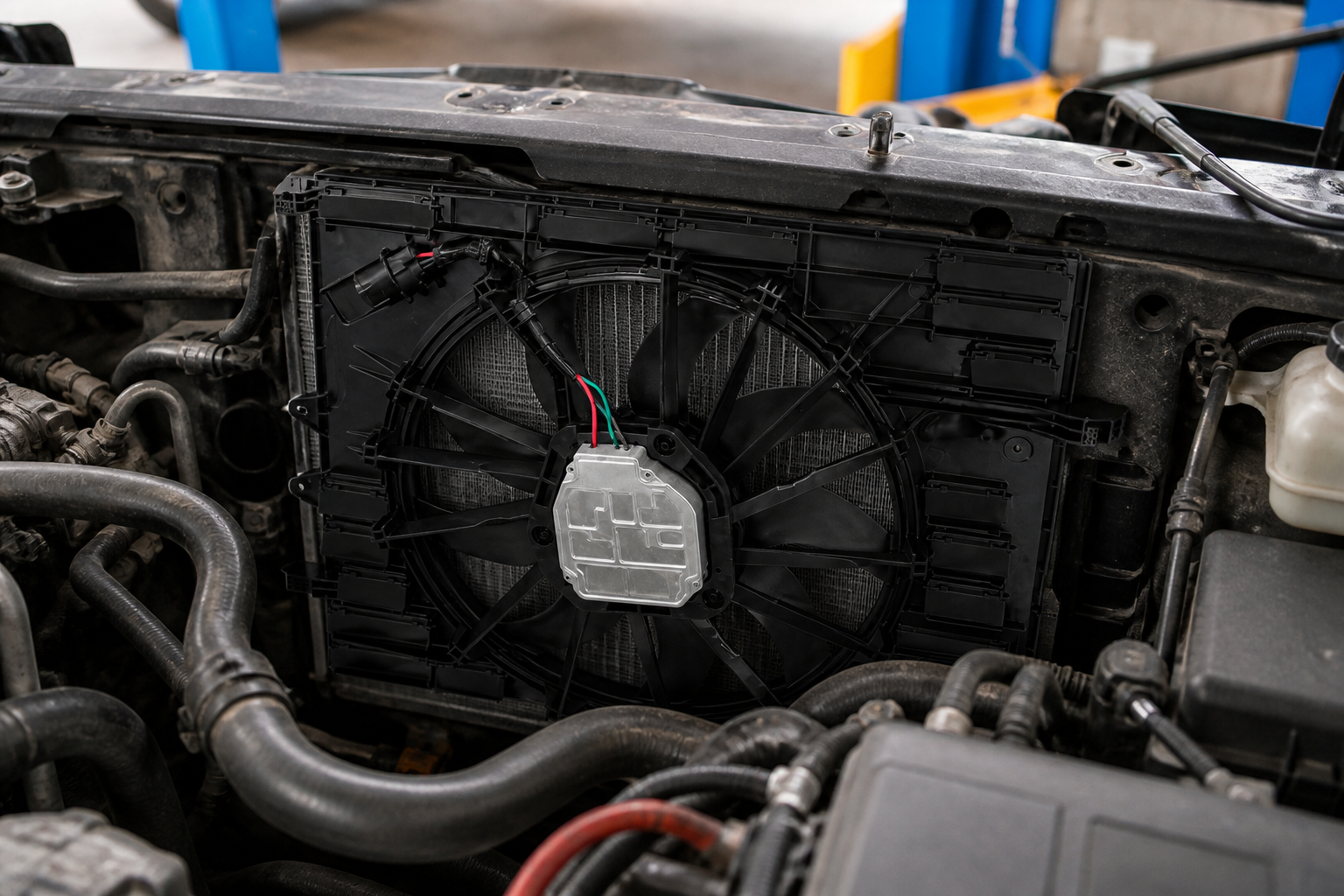
Advantages of a Single Fan
- Simpler installation and wiring
- Fewer motors, relays and connectors
- Lower initial cost in many applications
- Potentially lower total current draw
- Easier troubleshooting and maintenance
- Strong airflow when the fan and shroud are properly matched
Disadvantages of a Single Fan
- One motor failure can remove all powered airflow
- A large fan may not fit in a shallow engine compartment
- Radiator coverage can be uneven without an effective shroud
- Cooling control may be less flexible
- Some high-heat or severe-duty applications may require more coverage
What Is a Dual Fan Cooling System?
A dual fan cooling system uses two separate fan motors positioned side by side. Depending on the vehicle, the fans may run together, operate at different speeds or activate independently according to coolant temperature and air-conditioning demand.
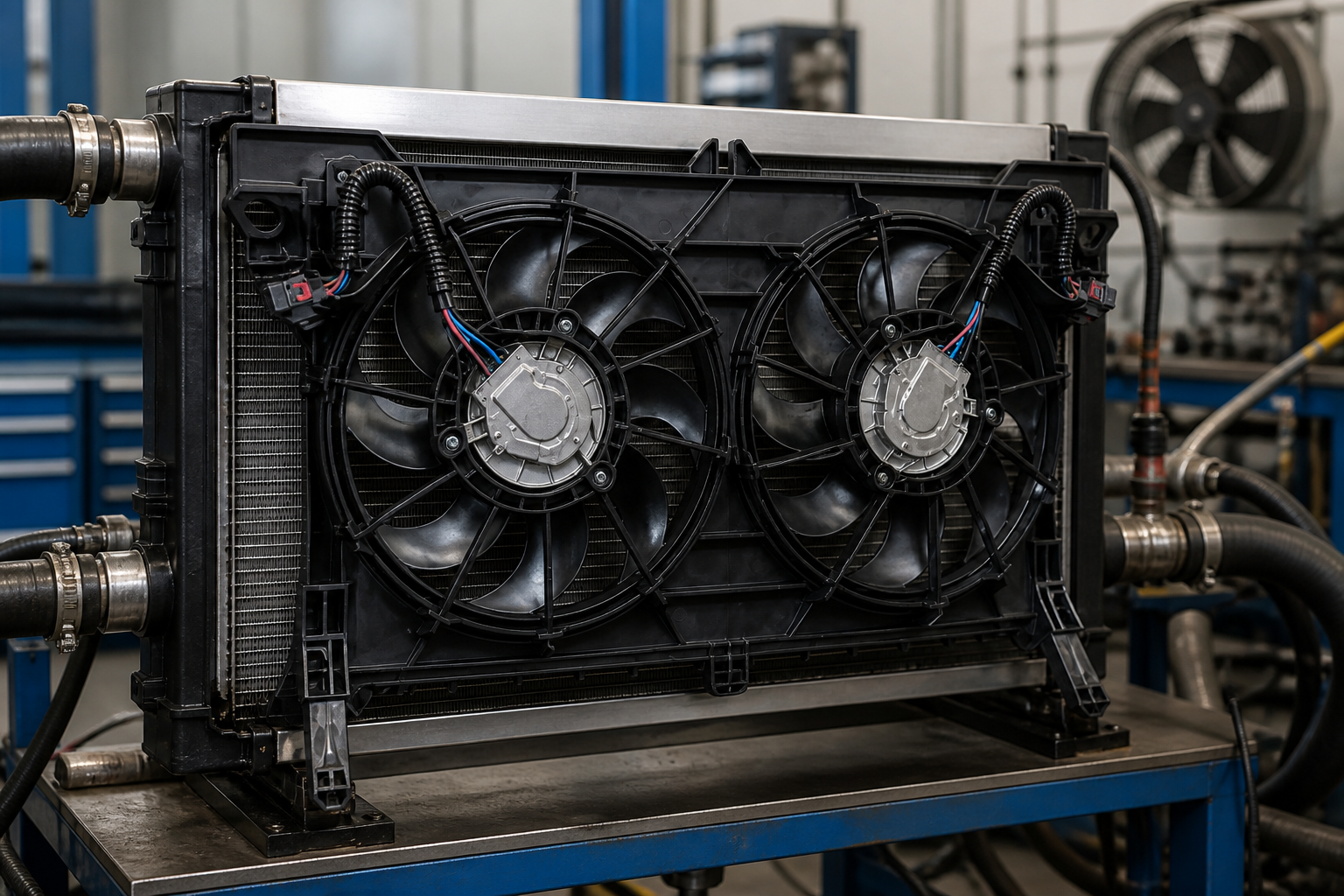
Advantages of Dual Fans
- Effective coverage across wide radiator cores
- Flexible packaging where one large fan cannot fit
- Potential for staged or independent fan operation
- Cooling output can adapt to changing operating conditions
- One operating fan may provide limited airflow if the other fails
- Suitable for many performance and heavy-duty applications
Disadvantages of Dual Fans
- More complex wiring and control
- Potentially higher combined electrical demand
- More motors, connectors and relays that may require diagnosis
- Higher purchase and installation cost
- Two weak fans may underperform one well-designed large fan
Single Fan vs Dual Fan Cooling Systems: Quick Comparison
| Feature | Single Fan System | Dual Fan System |
|---|---|---|
| Motors | One | Two |
| Installation | Usually simpler | Usually more complex |
| Radiator coverage | Depends heavily on diameter and shroud | Often effective on wide radiators |
| Electrical demand | Often lower | Potentially higher |
| Control options | Basic, two-speed or variable | Can be staged or independently controlled |
| Failure behavior | Motor failure stops powered airflow | One fan may continue if independently controlled |
| Typical application | Standard vehicles and moderate demand | Wide radiators and demanding applications |
Does a Dual Fan System Always Cool Better?
No. Cooling performance depends on the complete airflow system, not only the number of fans. Important factors include fan diameter, motor output, blade design, radiator resistance, shroud sealing, core coverage, installation position and voltage available at the motor.
Airflow figures also require context. A free-air CFM rating is measured without the resistance of a radiator or condenser. Actual installed airflow can be lower. Compare data measured under realistic restriction whenever the manufacturer provides it.
Why the Fan Shroud Matters
The shroud helps the fan draw air through a larger area of the radiator instead of pulling air from the open space around the blades. Without a well-fitted shroud, airflow may be concentrated only behind the fan circle, leaving other areas of the radiator with limited low-speed airflow.
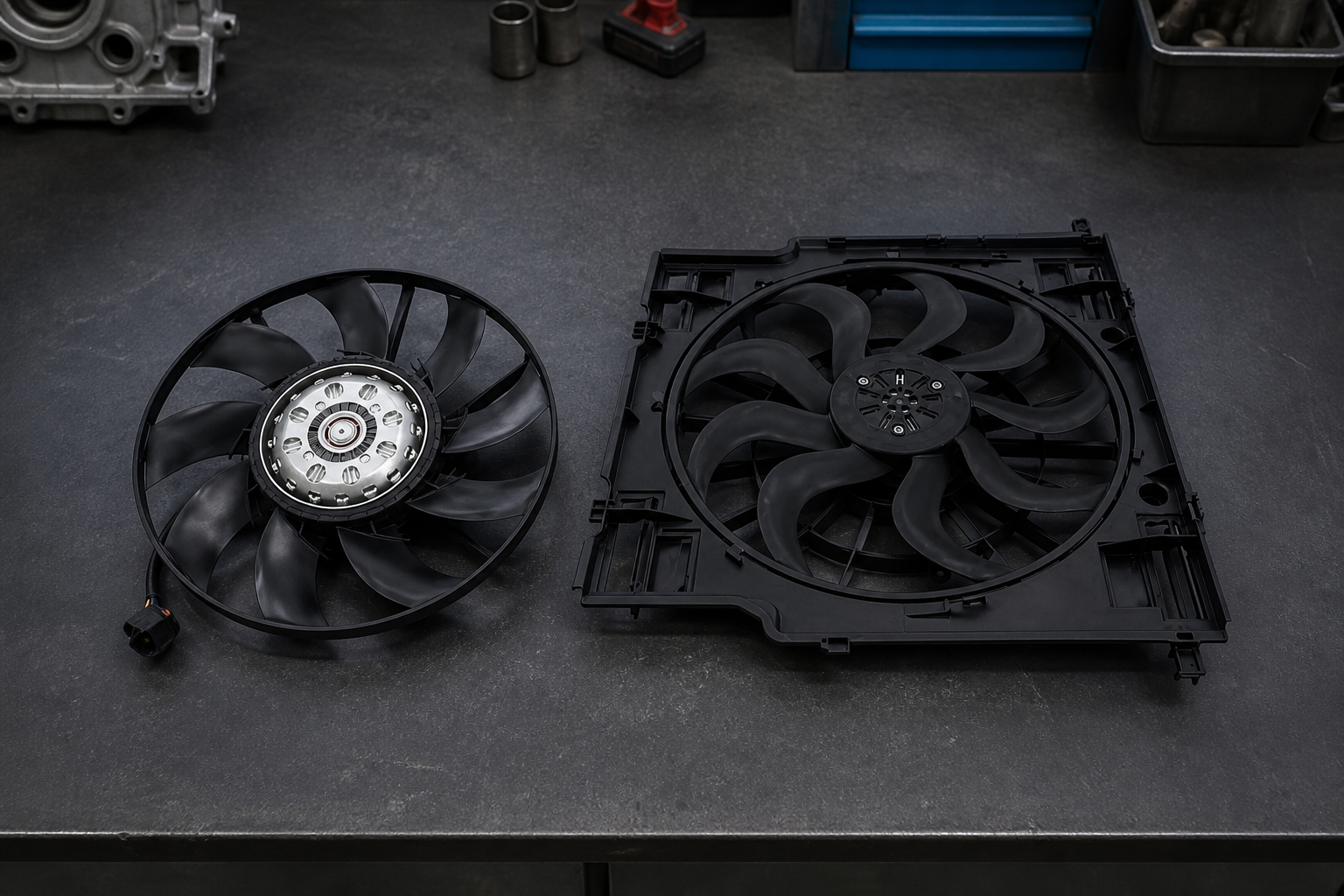
A suitable assembly should cover as much of the active radiator core as practical, fit closely against the radiator, maintain safe blade clearance and avoid unnecessarily blocking natural airflow at road speed.
When Should You Choose a Single Fan?
- The vehicle originally used a single fan
- The engine remains close to its original specification
- The radiator is relatively narrow
- There is enough depth for one large puller fan
- The charging system has limited spare capacity
- You want straightforward installation and diagnosis
- The vehicle is mainly used for normal road driving
For a direct replacement, matching the original application is usually the most reliable approach. Dimensions, mounting points, airflow direction, electrical connector, control module and OE reference all matter.
When Should You Choose Dual Fans?
- The radiator is wide and difficult to cover with one fan
- Available mounting depth is limited
- The vehicle has greater-than-original cooling demand
- The vehicle is used for towing, heavy loads or extended idling
- The control system supports staged operation
- More low-speed airflow is required through the A/C condenser
Dual fans should still be selected by verified fitment and operating requirements. Installing two fans without confirming airflow, current draw and control compatibility can create new cooling or electrical problems.
Can You Replace a Single Fan With Dual Fans?
Yes, but the conversion must be planned as a system. Before changing the original configuration, check the following:
1. Available Space
Measure radiator width, height and available depth. Check clearance around the engine, belt drive, pulleys, hoses, wiring and radiator support.
2. Realistic Airflow
Compare airflow through a radiator when possible, not just free-air CFM. Confirm that the shroud distributes airflow across the active core.
3. Electrical Load
Add the running-current requirements of both motors and allow for startup demand. The alternator, battery, wiring, relays, fuses and controller must support the load without excessive voltage drop.
4. Fan Control Strategy
Determine whether the fans should start together, run at separate temperature thresholds, operate at low and high speeds, or respond separately to coolant temperature and A/C pressure. Gates notes that a failed fan-control module can contribute to overheating and poor air-conditioning performance.
5. Airflow Direction
Confirm whether the fan is designed as a puller or pusher. Reversing motor polarity does not guarantee correct performance because blade curvature and motor rotation may be optimized for one direction.
Common Cooling Fan Selection Mistakes
- Choosing only by advertised CFM
- Assuming two fans are automatically better than one
- Ignoring fan thickness and engine clearance
- Using undersized wiring, fuses or relays
- Installing the fan in the wrong airflow direction
- Mounting a fan without an effective shroud
- Ignoring a restricted radiator or condenser
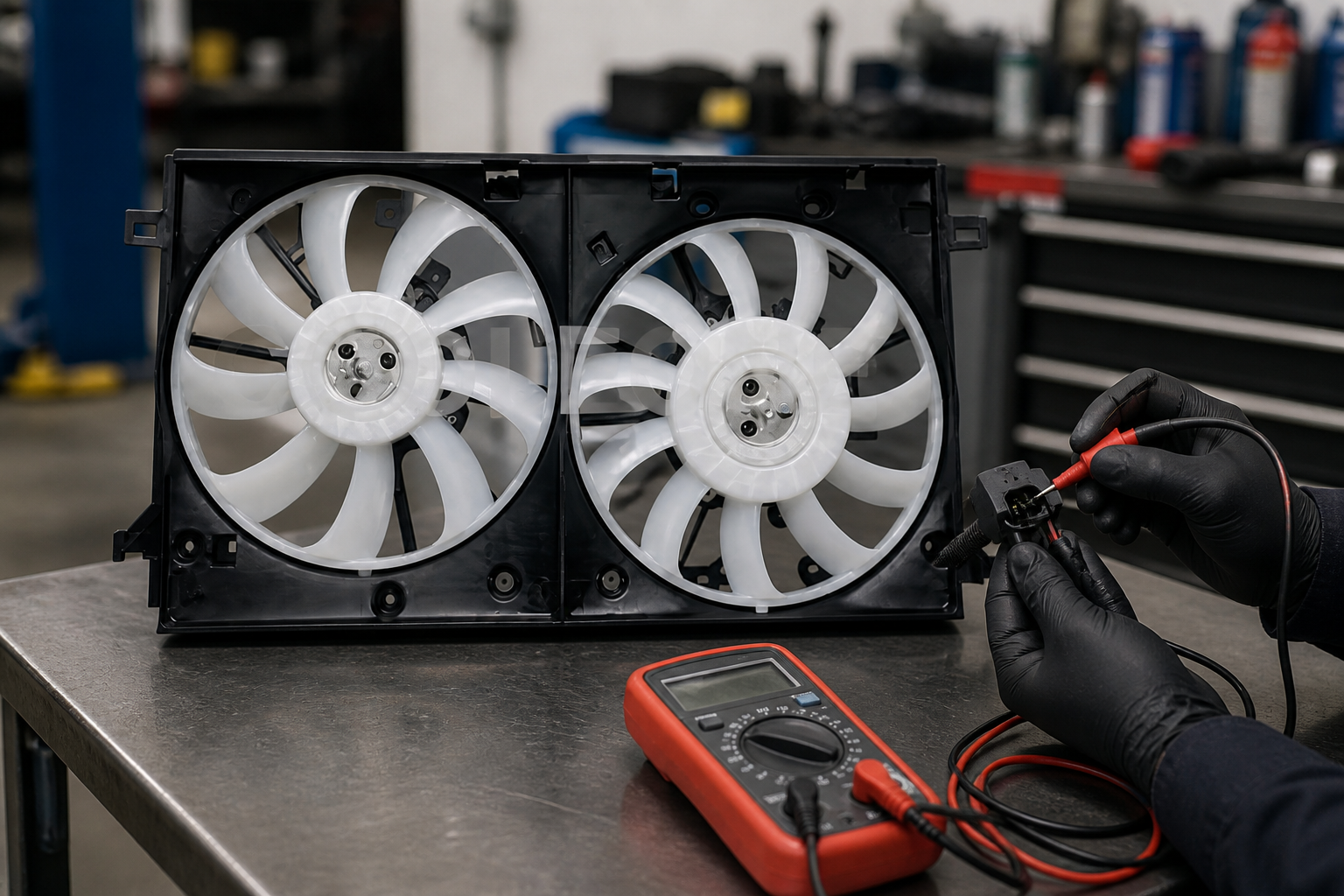
- Replacing the fan before testing the relay, sensor, wiring and control module
Remember that overheating can also be caused by low coolant, trapped air, a faulty thermostat, a restricted radiator, a damaged water pump or an internal engine problem. A larger fan cannot correct an unrelated cooling-system fault.
Which Cooling System Is Better?
For most standard vehicles, the best solution is the configuration engineered for the original application. A correctly sized single fan is simple, efficient and capable of excellent cooling. Dual fans are useful when a wide radiator, restricted mounting depth, increased heat load or staged control makes them the better match.
The practical rule is simple: choose by fitment, installed airflow, radiator coverage, shroud design and electrical compatibility—not by fan count alone.
Frequently Asked Questions
Do dual radiator fans move more air than a single fan?
They can, but not always. Total installed airflow depends on motor power, blade design, diameter, radiator resistance and shroud efficiency. Two small fans do not automatically outperform one large fan.
Can one fan in a dual-fan system run without the other?
Some systems use staged or independent control, while others operate both fans together. The correct behavior depends on the vehicle wiring and control strategy.
Is a puller fan better than a pusher fan?
A puller fan behind the radiator is commonly preferred when space allows because it creates less obstruction in front of the heat exchangers. A pusher fan may be used when rear clearance is limited or supplemental airflow is required.
Will dual fans fix an overheating engine?
Only if insufficient low-speed airflow is the actual cause. The complete cooling system should be diagnosed before changing fan size or configuration.
How do I find the correct radiator fan for my vehicle?
Check the vehicle make, model, year, engine, OE part number, connector, mounting points, dimensions and control type. Fan diameter alone is not enough to confirm compatibility.
Find the Right Radiator Fan for Your Vehicle
Whether you need a single radiator fan, a dual-fan assembly or a complete fan-and-shroud module, correct fitment is essential. Browse our radiator fan range, or send us your vehicle make, model, year, engine specification and OE number for a compatibility check.