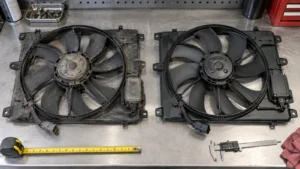
A cracked radiator fan blade does not automatically mean you need a complete fan assembly. Blade-only replacement makes sense when the vehicle manufacturer provides a procedure for replacing the fan wheel separately, the parts it mounts to are sound, and the cause of the damage has been addressed. If the wheel is not separately serviceable, or the motor shaft or its mounting is damaged, a new wheel alone will not put the fan back in alignment.
Do not run a cracked fan to see whether it vibrates. Stop safely, switch off and arrange inspection before driving again. An electric fan can start unexpectedly even with the engine off. Keep clear of the blades and have the workshop isolate the fan as specified for the vehicle. A missing fragment can damage the shroud or radiator; NHTSA documented that outcome in an investigation of certain Jeep Grand Cherokee electric fans. Glue, trimming the opposite blade or trying to rebalance the wheel by hand is not a repair.
What does “replace just the blade” actually mean?
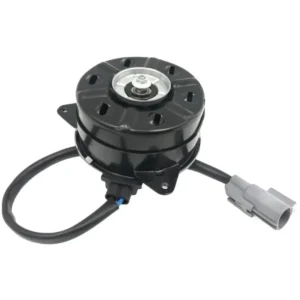
In a parts catalogue, “fan blade” often means the entire rotating wheel: all the vanes and their central hub. It does not mean replacing a single cracked vane. The wheel is distinct from the motor that turns it and the stationary shroud around it. On a mechanically driven fan, the wheel may attach to a fan clutch instead. Check which design is on the vehicle before looking up the repair.

Read the marks before choosing the repair
At the blade tip: A polished strip on the tip and a matching arc inside the shroud point to contact. Look for a displaced shroud, broken locating tab or cooling pack shifted by a front-end impact. A replacement wheel of the right diameter can hit the same spot again if the frame is still out of position.
At the root or hub: A split where a vane joins the hub means the wheel is damaged, not necessarily that the motor is bad. The next question is whether the hub still had a secure, square seat. Inspect the mating surfaces and retainer for damage under the vehicle’s service procedure. Do not assume the new wheel will sit straight on a worn or bent shaft.
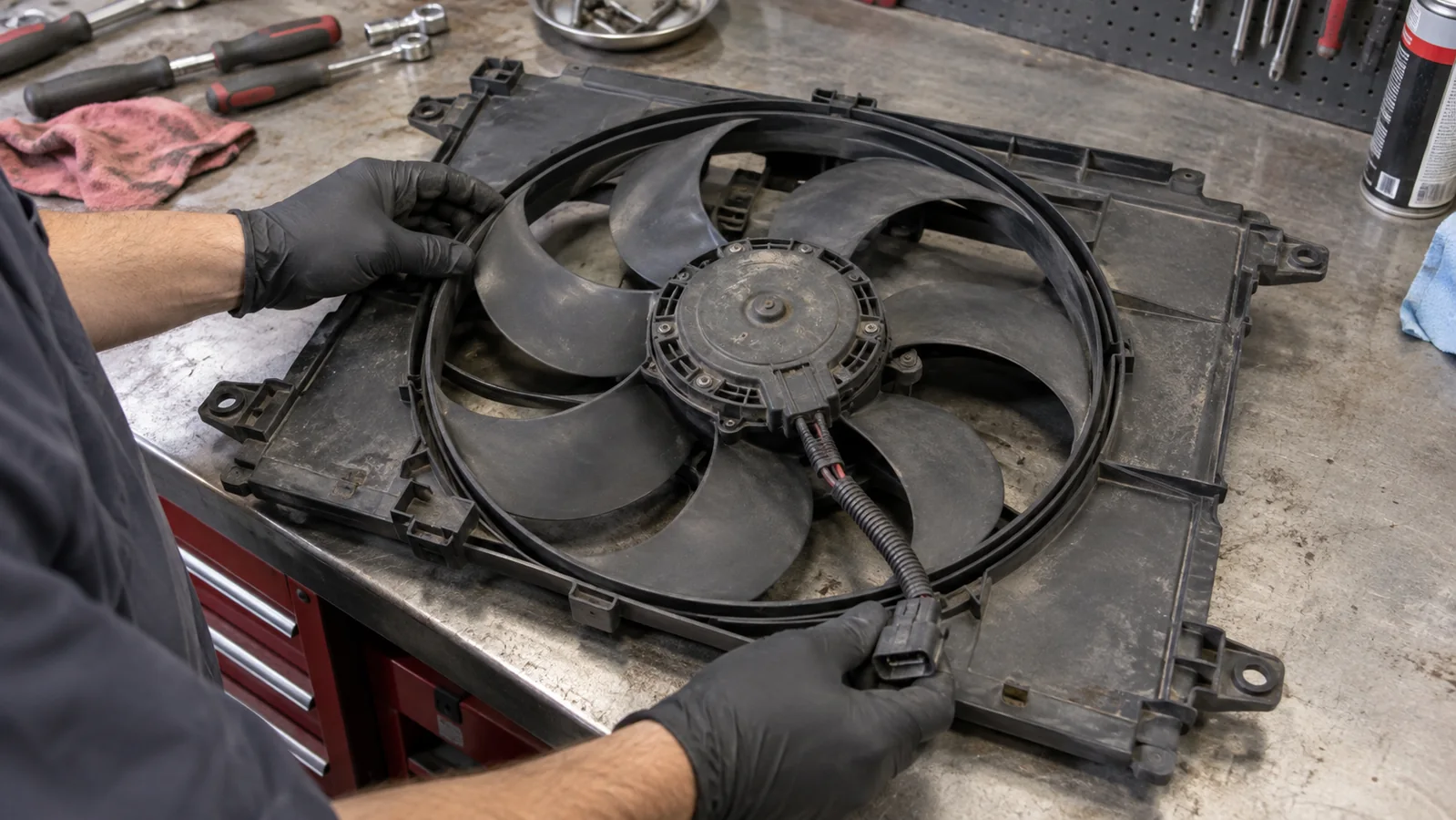
At the drive and mounts: On an electric fan, have the workshop assess motor-shaft runout and bearing play against the manufacturer’s limits. On a clutch-driven design, check the specified clutch and drive support instead. There is no single acceptable amount of movement for every fan. A loose mount can let a sound wheel strike the frame; a new assembly will not correct a bent support on the vehicle.
Blade, shroud or complete assembly?
| Workshop finding | Repair decision |
|---|---|
| The wheel alone is cracked. Its drive, seat and supports are within specification, and a separate wheel and repair procedure exist. | Replace the complete blade wheel using the specified retention hardware and procedure. Verify clearance before returning it to service. |
| Blade tips have rubbed through a displaced or cracked shroud. | Replace the damaged wheel and correct the cause of contact. Determine whether the shroud or its mounts can be serviced separately. |
| The electric motor shaft is bent, the bearing is outside specification, or the motor mount is broken. | Do not quote a wheel alone. Check whether the damaged components are individually serviceable or the manufacturer specifies a matched assembly. |
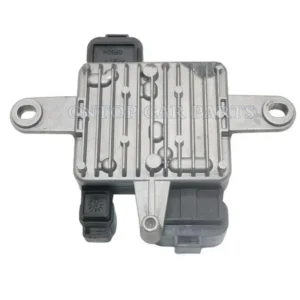
| The wheel is not separately serviceable for this configuration. | Order the specified fan unit. Confirm whether the shroud, controller and harness shown in a catalogue photo are included. |
Why the vehicle-specific procedure matters
In GM bulletin 20-NA-010, certain L5P-equipped Chevrolet Silverado and GMC Sierra trucks had a fan that could contact shroud mounting tabs. For that particular condition, GM specified a revised fan blade rather than modifying the blade or shroud. It is an example of a documented blade-only remedy for a contact issue, not a general instruction for cracked electric fans. Check the current service information for the vehicle being repaired.
What to send when requesting a replacement
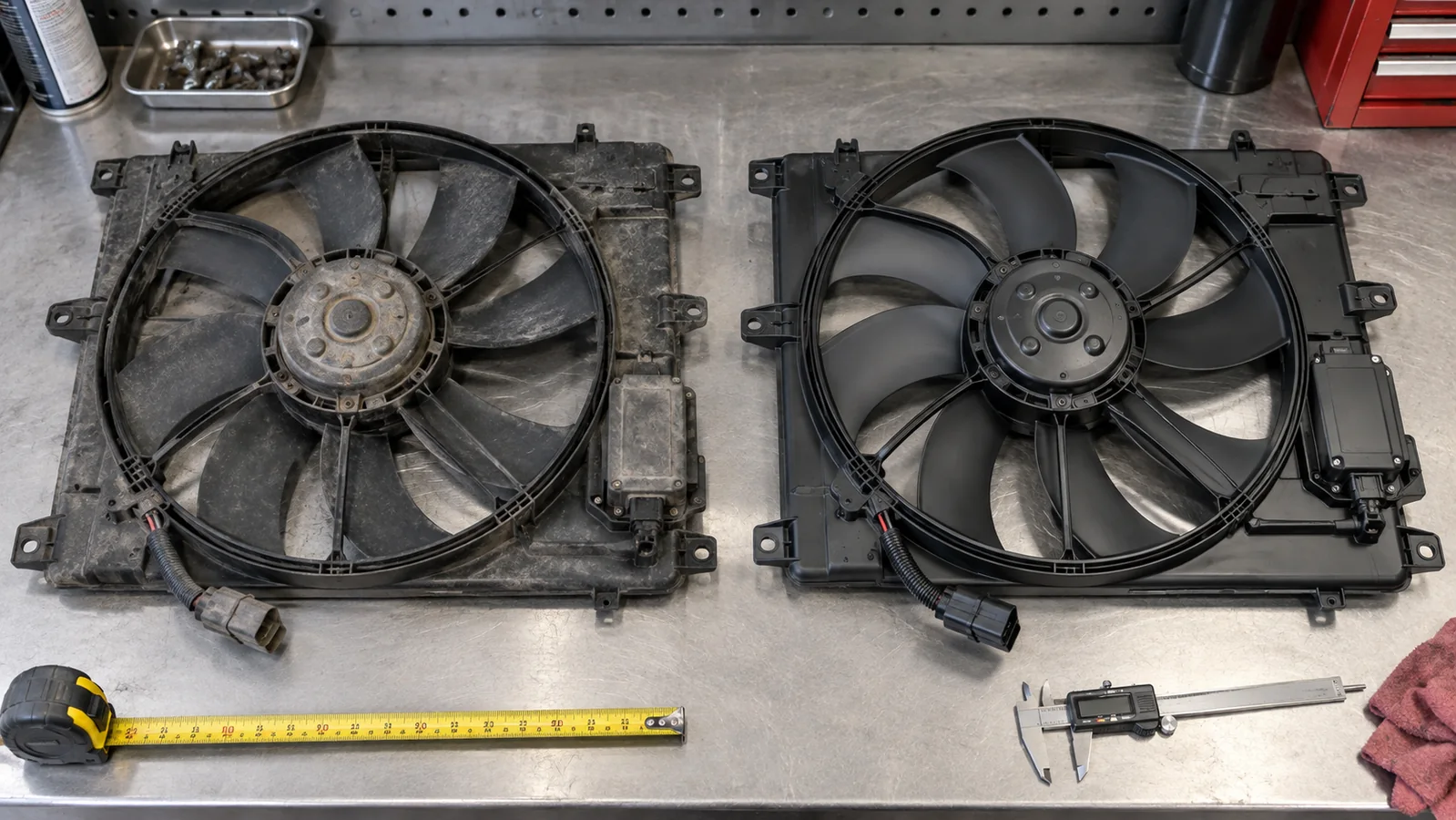
Give the supplier the vehicle year, model, engine and original reference. Say whether that number came from the wheel, motor or shroud. Include a front view of the complete fan, a close-up of the hub and a side view showing how far the wheel sits forward or back from its mounting face. Two wheels can share an outside diameter but differ in offset, mounting pattern or blade pitch.
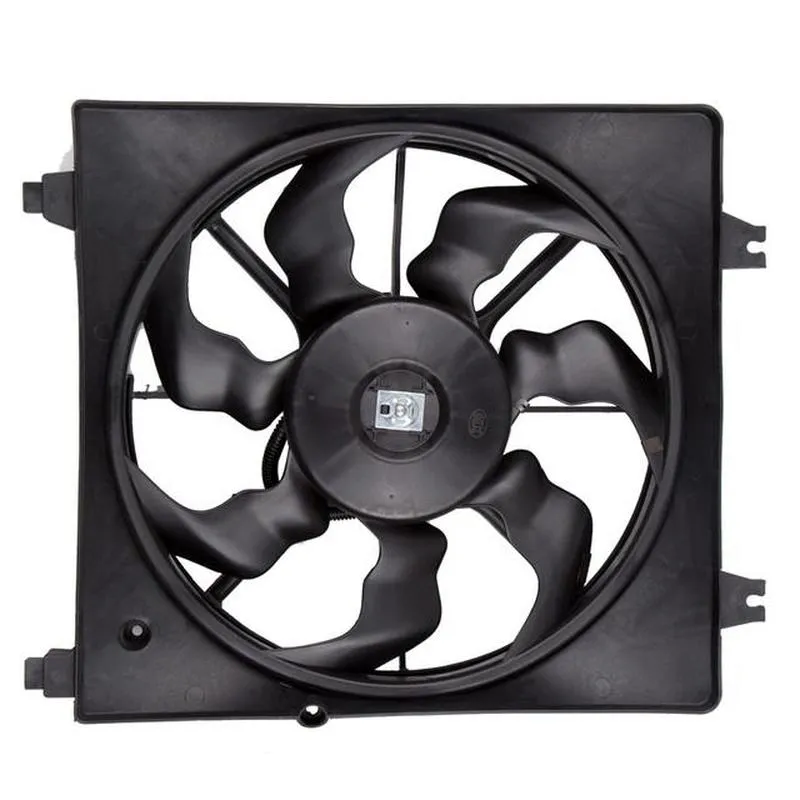
For example, Yongshang Auto lists 058121301B as a cooling fan blade for an Audi A4 application. That listing identifies what to enquire about; it does not establish that every A4 has the same fan. For comparison, the Hyundai Santa Fe example below is catalogued as an assembly, not as a substitute for the Audi wheel.
Not sure which number is on the damaged part? Send Yongshang Auto the reference and photos for a fitment enquiry, and specify whether the workshop has approved blade-only replacement or requested the complete unit.